This is default featured slide 1 title

Lorem ipsum dolor sit amet, consectetur adipisicing elit, sed do eiusmod tempor incididunt ut labore et dolore magna aliqua. Ut enim ad minim veniam. blogger theme by BTemplates4u.com.

This is default featured slide 2 title

Lorem ipsum dolor sit amet, consectetur adipisicing elit, sed do eiusmod tempor incididunt ut labore et dolore magna aliqua. Ut enim ad minim veniam. blogger theme by BTemplates4u.com.

This is default featured slide 3 title

Lorem ipsum dolor sit amet, consectetur adipisicing elit, sed do eiusmod tempor incididunt ut labore et dolore magna aliqua. Ut enim ad minim veniam. blogger theme by BTemplates4u.com.

This is default featured slide 4 title

Lorem ipsum dolor sit amet, consectetur adipisicing elit, sed do eiusmod tempor incididunt ut labore et dolore magna aliqua. Ut enim ad minim veniam. blogger theme by BTemplates4u.com.

This is default featured slide 5 title

Lorem ipsum dolor sit amet, consectetur adipisicing elit, sed do eiusmod tempor incididunt ut labore et dolore magna aliqua. Ut enim ad minim veniam. blogger theme by BTemplates4u.com.

Showing posts with label emergency preparedness. Show all posts

Wednesday, May 15, 2013

Emergency Preparedness: Water Purification

When it comes to planning Emergency situations, water is at the top of our list.  Where do I get water from when I ran out of clean water?  How do I haul all that water?  Where and how do I store water?  How much?  When?

I have searched for some possible solutions considering the crisis of the emergency.  If we have to evacuate, our 5 gallon jugs that we have stored would not go with us.  I would most likely grab my baby to run than a 5 gallon jug of water.  If it is not an evacuation emergency but instead we have a shortage of water, then the options are different.  Also, we are preparing for a nuclear contamination in our water, so I had researched some good options that are of course cost effective.

Now we are looking at how third world country people live.

Using Gravity Water Filter in India


For evacuation emergencies:

31k3elX+yrL

1.  We have in our back pack that is ready to grab and go at any time.  This is assuming there is no water shortage just contamination or water from a river or creek.

Seychelle Water Straw Radiological Nuclear Radiation Water Filter 25 Gal, that Removes 100% of Major Nuclear Contaminants from Drinking Water.  They also have water bottles and pitchers.  We also have the pitcher to also grab and go.  See other water purification products here

2.  If the situation is no water and dirty water, then these satches will come in handy.

3.  Because of shortage of water, I recommend mineral drops and alkaline drops to really hydrate the body with even little water.

4. Iodine tablets or liquid iodine can purify water.  These have expiration dates.  There are also iodine crystals that have an indefinite shelf life.


For Home water purification emergency:

1. We have two options right now: The gravity ceramic filtration system and the Seychelle pitcher or the britta filter pitcher.  I prefer the seychelle brand because it filters nuclear contaminants.  The Gravity ceramic filter is great because it is least expensive and doesn't require electricity and it filters out 100% of Giardia, E. Coli, and many more harmful substances.

Low Cost Gravity Water Filter


2.  Boil or pasteurize your water.  Boiling water kills all the pathogens (germs in the water.  You can also use a solar oven or rocks to boil water.stones2and learn how here. Fuel will be too precious to burn it to purify water.

3.  Chlorine: For less than $20 you can store a year’s supply of chlorine that will purify your water. But you MUST use caution when you’re storing and using it.  That is why I don't like this option, but I have a quart bottle hidden somewhere, if worse comes to worse, this is my last resort.

For Water Shortage Emergency:

1.  We have 5 gallon jugs filled with water.  But the question is for how long will we need water?

2. Identify a running river, or creek and use the Gravity filter to filter the water.


What are your water purification / storage plan for emergencies?  I would like to hear more ideas.


Thursday, May 2, 2013

Simple and Cheap Food Preparedness

Have you been overwhelmed by all the dried food buckets for emergencies and their high prices.  I don't like processed foods, so I have been saving legumes and grain in bulk for emergencies.  The truth is that you can have real whole foods for one year for about $225.  Here is my food preparedness plan:  1.  Start out with the basics  2.  Add to this storage as I am able.

Every month I focus on adding one food item to my preparedness pantry.  The four basic ingredients you need to survive and eat healthy are: Whole grain or legumes, powdered milk, honey (raw and local is best) and Real Salt.

To give you an idea of how much is needed here is a breakdown.  For one person for one month you need:

27 pounds of whole grain (spelt, wheat, quinoa, millet, mung beans,lentils, etc.)

3 pounds of honey

5 pounds of powdered milk

1 pound of Real Salt

Seriously, you can get all nutrients from these foods because you can sprout the grains and have all the vitamins and minerals that fruits and vegetables can give you.  To this list I am adding oil (olive and coconut) as another essential.

Here is some more information you may find helpful from http://www.provident-living-today.com/Bulk-Food-Storage.html

Every storage plan should include bulk food storage items. These basics are needed in everyone’s home storage. Long-term food storage is cheap, and healthy.

These provisions are your survival foods. At the bottom of this page, I’ll show you a simple six-step plan to enhance your bulk food storage. You’ll want to add in the extras; it will make all the difference in your emergency food supply.

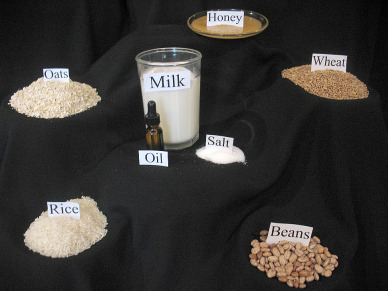
This list is a guideline for storing the bare minimum. The picture below shows you how much food you’ll get to eat everyday if you follow this guideline. And this is all you’ll get to eat. That is why I call it survival rations. You will stay alive, but eating probably won’t still be your favorite pastime.

You get 1 cup Wheat, 1 cup Oatmeal, 1/2 cup Rice, 1/3 cup beans, 2 Tbs Oil, 1 glass Milk (2 T powdered milk), 1/3 cup honey, and 2 tsp salt per day. Your daily menu might look something like this:

Breakfast: Hot oatmeal with honey & milk
Lunch: Tortillas and Sprouted Wheat
Dinner: Rice and Beans

LDS- Mormon Food Storage One Day Rations of Bulk Food Storage

With that said, whole grains are still the foundation of your food storage. You can use them in almost everything you cook. These are the dollar stretcher foods. I can feed my family of 12, breakfast every day for a month on one 50-pound bag of oatmeal (costs about $20). Add peaches, milk, and honey for taste, and you have a nutritious breakfast that children love. A one year supply for 1 adult should include: 400 lbs of Grain, 60 lbs of Legumes, 16 lbs of Powdered Milk, 10 Qts of Oil, 60 lbs of Sugar or Honey, and 8 lbs of Salt.The shelf life on these items is included in the chart below.

The chart shows how much it costs for a one-year supply for 1 adult. Adjust it to your individual needs. For example: rice and oats are a lot easier on a child’s digestive system compared to wheat. Store more of these grains for the children.

See Bulk Food Storage Containers to learn how to store your bulk food.

NOTE: You don’t want to start using wheat when that is all you have to eat. It will be hard on your system. Slowly add it to your diet, my family has been eating wheat for years and we don’t have any problems with a whole-wheat diet. Even my babies eat wheat and do great.

Cost of One Year Supply for 1 Adult


This chart was created in 2009. Because the price of food fluctuates, prices might be different than the ones represented in the chart.

LDS - Mormon Bulk Food Storage - One Year Supply Chart

*Not all olive oil lasts this long. Research the shelf life of the oil before buying it.

Wow, look at that. For $224.94 you can get a years supply of bulk food storage if you go with the cheaper sugar and vegetable oil. If you go with the Olive Oil and Honey, it will cost you $410.76. Getting your bulk food storage is a great place to start, and it's cheap!

A Note About Honey: When you are buying honey, make sure you can trust your source to give you pure honey. Cheap honey is actually corn syrup. You get what you pay for. Local Honey is actually the best option to buy if you have the opportunity because the bees are using the same plants and flowers that you encounter everyday. It helps you with your allergies

Picture of a 1 year supply of bulk food storage rations for one adult.
LDS - Mormon bulk food storage picture of one year supply

Adding to the Basics


. . . Bulk Food Storage Expanded

. . . A Six Step Plan

Add some variety to your bulk food storage.

STEP 1:
IF I HAVE Wheat, Powdered Milk, Oil, Salt, Honey or Sugar, Water
I CAN MAKE Popped Wheat ,Steamed Wheat, Sprouted Wheat, Cooked Cracked Wheat, Tortillas

STEP 2
IF I ADD Yeast, Baking Powder, Powdered Eggs, Baking Soda
I CAN MAKE THESE ADDITIONS: Custards, Puddings, Pancakes, Cookies, Waffles, Muffins, English Muffins, German Pancakes, Crepes, Egg Noodles, Pasta, Breads, Biscuits, Crackers, Mayonnaise. A lot more options huh? Keep reading.

STEP 3:
IF I ADD Powdered Butter, Tomatoes, Powdered Cheese
I CAN MAKE THESE ADDITIONS: Meatless Dinners, Meatless Casseroles, Cream Sauces These really add flavor.

STEP 4:
IF I ADD Unflavored Gelatin, Canned Milk, Canned Fruits
I CAN MAKE THESE ADDITIONS: Jello Salads, Whipped Cream Desserts, fruit dishes Mmm, now we have desserts.

STEP 5:
IF I ADD Soup Base, Rice, Legumes (Beans), Beef Broth, Chicken Broth, Alfalfa Seeds, Sesame Seeds
I CAN MAKE THESE ADDITIONS: Hearty Dinner Soups, Chili, Rice Puddings, Refried Beans, Rice Dishes, Fresh Sprouts, Gluten This would really expand your dinner menu in an emergency.

STEP 6:
IF I ADD Canned Meats, Dried Potatoes
I CAN MAKE THESE ADDITIONS: Dinners, Casseroles, Sandwiches. This may not sound like a lot but a meaty flavor can make all the difference.

STEP 7:
EXTRAS: Oats, Raisin, Nuts, Peanut Butter, Granola, Juices, Corn Starch, Soup Mixes, Spices & Flavorings, Lemon Powder or Juice, White Flour, Shortening or Margarine, Cream of Tartar, Junket Rennet Tablet, Molasses, Karo Syrup, etc. These are small things that you could do without but really add variety to your diet.

What do you cook with? Add it to your food storage.

Tuesday, April 23, 2013

Emergency Preparedness: How To Wash Clothes Without A Washing Mahine

I had been thinking what would be the most efficient way to take care of laundry in the case of an emergency.  I am thinking here about months without electricity.  That is what we are really preparing for.  I would say even 1-2 years.  Yes, things aren't looking good around us.  So, when my husband said, " ok, what are our priorities".  Of course after food and water, I thought, "laundry".

I was thinking of getting a washing board from the mexican store.  My daughters would love it and feel like we are reenacting The little House on the Prairie time period.  If the time comes, we pray it would also be a fun earning adventure for the family.  That can be done easily if we are well prepared.  But I had hesitated to get the wash board because it seems like a lot of time consuming work.

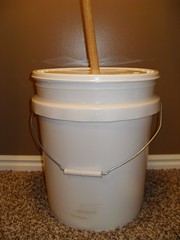
Therefore I am adopting the bucket plunger method.


Supplies Needed:

  • 5-gallon bucket with lid (cut hole in middle of lid for plunger handle to fit through)

  • Toilet plunger (brand-new, clean)

  • Store in bucket:

  • Liquid laundry detergent

  • Stain remover/stain stick

  • Vinegar (add 1/2 cup to rinse water) helps remove soap

  • Rope (for clothes line)

  • Clothes pins


To Use:

  1. Empty contents of bucket.

  2. Place water, small amount of detergent, and clothes in bucket.

  3. Move plunger up and down for a few minutes or until clothes are clean.

  4. Remove soapy clothes and ring them out.

  5. Dump out soapy water (on your garden or lawn.)

  6. Place soapy clothes in bucket and fill with clear, clean water.

  7. Add 1/2 cup vinegar to rinse water.

  8. Move plunger up and down to rinse clothing.

  9. Wring out clothes and hang to dry.


Conserve water - use rinse water for next load of laundry.

NOTE: You could store two 5-gallon buckets, stack one inside of the other. Use one bucket for the soapy water and the other for the rinse water. You may be able to wash and rinse a couple of batches of clothes without changing the soapy water depending on how dirty the clothes are.

As found on: http://pgward.org

Friday, April 19, 2013

Family Fire Preparedness! How To Start A Fire

With all the chaos and uncertainty going on in our country.  It is now so essential that we prepare our homes and family for any emergency.  A wise woman would be prepared and "smile at the days to come".  At our home, we have taken aside one day a week to plan, brainstorm, learn and add something more to our emergency preparedness.  Our hearts go ut for the families who have lost loved ones and the thousands who were stranded as a result.  What if that happened here?  Are we ready?

So, this weekend, we are spending sometime starting a fire.  What child doesn't like that.  Be careful when you instruct this to your children that you mention strictly and seriously the boundaries about starting a fire.  Along the way give a powerful lesson about the tongue being like a small fire that can devour a forest.

Hopefully, in an emergency we are loaded with matches, not wet, or a lighter. We also carry with us in our emergency back pack a flint and steel.  Dad, has taught us how to use it.  Here are other ways, just in case, we are trying.

 SCIENCE FRICTION: FIVE FIRE-MAKING METHODS from www.boyslife.com

Most experienced Scouts know how to start a fire without a lighter or matches. Do you? When lost in the wilderness, being able to make a fire can be a lifesaver, both to signal your location and to use for warmth and cooking. Here are five ways to start a small fire in an emergency.

Before you attempt to start a fire, you must have tinder and kindling materials available and understand how to use them. Many people fail to start fires even when they have good matches! A fire is built in stages. You first need to cause a small spark to ignite your tinder, small dry items like tissue paper, dead grass, twigs, leaves, lint or even paper money. Blow on the tinder carefully, so it stays lit and grows into a larger fire. Then carefully add kindling—sticks, branches or thick paper—to keep the fire going. Once the kindling is burning, you can add larger logs or other fuel.

fire_plow.jpgMETHOD 1: MAKE A FIRE PLOW

What You’ll Need:

• Hard stick with a blunted tip
• Flat piece of wood
• Tinder
• Kindling
• Knife or sharp-edged rock

What You’ll Do:

Using the knife or sharp rock, scratch a straight indentation in the center of the flat piece of wood about the same width as the blunt stick. Arrange the tinder so air can easily circulate, and set it at the foot of the piece of wood. Then, in a kneeling position, hold the flat piece of wood between your knees at an angle and move the stick rapidly back and forth in the indentation until friction ignites the fibers of tinder at the base. Mix in more tinder material and fan the smoke until a small fire starts. To keep the fire going, carefully add kindling material.

spark_generation.jpgMETHOD 2: SPARK GENERATION

What You’ll Need:

• Knife or steel
• Sharp-edged rocks
• Tinder
• Kindling

What You’ll Do:

Use this method with very dry tinder material in a secluded, non-windy environment. Depending on what items are available, strike two rocks together to create a small spark close to tinder material. If a spark catches the tinder, you will see a glow. Carefully blow on it so it turns into a small flame. Fan the material until it starts to smoke and burn. If you have an item made of steel, like a knife, scrape it against various rocks until a spark appears.

fire_lens.jpgMETHOD 3: MAKE FIRE WITH A LENS

If it’s bright and sunny, it’s possible to use a lens to focus the heat of the sun on tinder material and start a fire.

What You’ll Need:

• Lens (from eyeglasses—reading glasses only, a magnifying glass, binoculars or telescope)
• Tinder
• Kindling

What You’ll Do:

With plenty of dry tinder available, aim the lens at it until it starts to smoke. Have other tinder material available to keep the fire going. When the tinder begins to burn, add kindling material.

fire_reflector.jpgMETHOD 4: MAKE FIRE WITH A REFLECTOR

What You’ll Need:

• A reflector from a flashlight or headlight
• Tinder
• Kindling

What You’ll Do:

Position the tinder material in or in front of the reflector for maximum absorption of the sun’s rays. With plenty of sunshine available overhead, and a little luck, the tinder material will get hot enough to catch fire.

fire_water.jpgMETHOD 5: MAKE FIRE WITH WATER

When positioned properly, water can act as a lens and focus enough of the sun’s heat to ignite tinder.

What You’ll Need:

• Water
• Jar or bottle
• Tinder
• Kindling

What You’ll Do:

Pour about two teaspoons of water into a clear jar or bottle. Tilt the jar so the water rests in a corner at the bottom and position it so the sun’s rays shine through the water onto the tinder and ignite it.